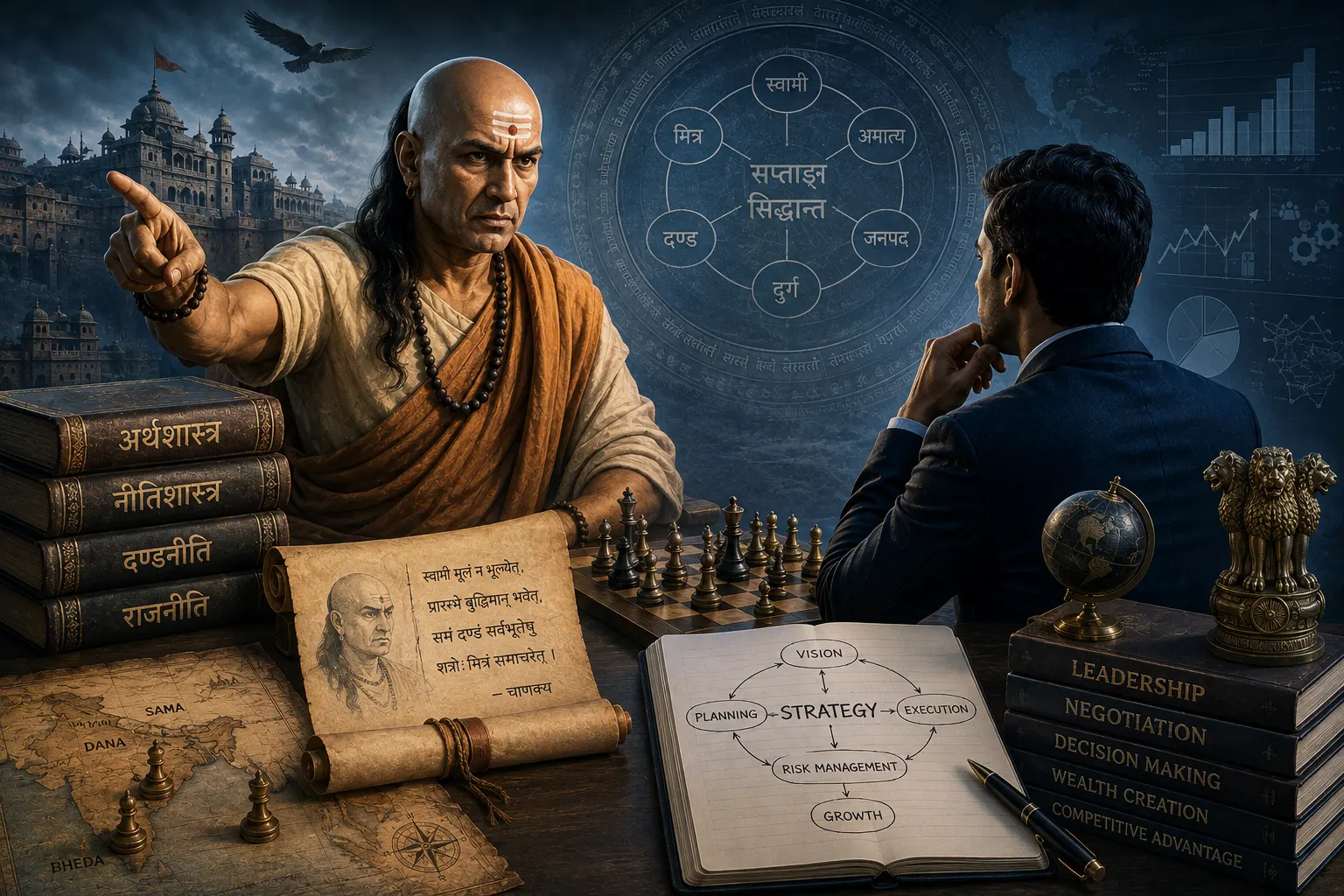

The Ramayana is often seen as a religious epic, but for business owners, it is also a timeless guide to leadership, strategy, ethics, decision-making, team building, and long-term success.
Business may involve technology, AI, marketing, finance, and operations today, but the challenges remain the same as they were thousands of years ago—choosing the right people, making difficult decisions, handling competition, building trust, and leading with integrity.
Here are some practical business lessons from the Ramayana that every entrepreneur can apply.
1. Character Is Your Greatest Competitive Advantage
Lord Rama was respected not because of his position, but because of his character.
Customers may buy because of your marketing once.
Employees may join because of your salary.
Investors may support because of your business model.
But people stay because they trust you.
In today’s business world, reputation spreads faster than advertising. Build a business where your word carries value.
Business Lesson: Protect your reputation more than your profits.
2. Leadership Means Putting Duty Before Comfort
Rama accepted fourteen years of exile without creating conflict because he valued responsibility over personal gain.
Business owners face similar situations.
Sometimes you must sacrifice short-term comfort to protect long-term credibility.
You may need to:
- Delay personal income
- Work longer hours
- Invest before seeing returns
- Take responsibility for team failures
Great leaders accept responsibility before seeking rewards.
3. Build the Right Team, Not Just the Biggest Team
Rama’s victory was never because he had the largest army.
He had the right people.
Hanuman brought execution.
Lakshman brought loyalty.
Sugriva brought partnerships.
Jambavan brought wisdom.
Vibhishana brought strategic intelligence.
Every successful company needs people with different strengths.
Hiring people similar to yourself creates limitations.
Hiring people with complementary strengths creates growth.
Business Lesson: Build a balanced leadership team instead of collecting employees.
4. Trust Can Multiply Productivity
Hanuman crossed the ocean because someone believed in him.
Before that, he had forgotten his own potential.
Many employees underperform because nobody reminds them what they are capable of.
A good business owner doesn’t simply assign work.
They inspire confidence.
Recognition often creates better performance than pressure.
5. Every Business Needs Clear Values
The Ramayana clearly distinguishes right from wrong.
Successful businesses also require non-negotiable values.
Examples include:
- Never cheat customers
- Pay employees on time
- Honour commitments
- Deliver quality
- Be transparent
Without values, growth eventually collapses under its own weight.
Culture is built by the standards leaders refuse to compromise.
6. Listen Before You Decide
Rama constantly consulted trusted advisors before making important decisions.
Business owners often make the mistake of believing they must have every answer.
Seek advice from:
- Mentors
- Customers
- Employees
- Industry experts
- Financial advisors
Listening reduces expensive mistakes.
Strong leaders are confident enough to ask questions.
7. Choose Your Partnerships Carefully
Sugriva became a valuable ally.
Vibhishana became a strategic advisor.
Every partnership should create mutual value.
Whether you are selecting:
- Vendors
- Investors
- Co-founders
- Franchise partners
- Business collaborators
Evaluate values before evaluating opportunity.
A wrong partner can destroy years of hard work.
8. Intelligence Wins More Battles Than Strength
Before attacking Lanka, Hanuman gathered information.
He observed.
He analysed.
He understood the enemy.
Only then did action follow.
Many entrepreneurs launch products before understanding customers.
Research saves money.
Planning saves effort.
Knowledge reduces risk.
Never confuse activity with progress.
9. Communication Builds Confidence
Throughout the Ramayana, messages were delivered clearly and honestly.
In business, unclear communication creates:
- Confused employees
- Unhappy customers
- Delayed projects
- Internal conflicts
Leaders should communicate frequently, honestly, and consistently.
Silence creates assumptions.
Communication creates alignment.
10. Loyalty Must Be Earned
Lakshman and Hanuman were deeply loyal.
Their loyalty wasn’t purchased.
It was earned through respect, fairness, and purpose.
Employees remain loyal when they feel:
- Valued
- Heard
- Appreciated
- Trusted
- Included
Retention is not just an HR function.
It is a leadership function.
11. Never Let Ego Make Your Decisions
Ravana was brilliant.
He possessed knowledge, wealth, influence, and power.
Yet his ego blinded him.
Many businesses fail not because of competition, but because leaders stop listening.
Ego rejects feedback.
Wisdom welcomes improvement.
The market punishes arrogance very quickly.
12. Adapt When Circumstances Change
The path to Lanka was not straightforward.
New challenges required new strategies.
Similarly, businesses must continuously adapt.
Markets evolve.
Technology changes.
Customer expectations rise.
Successful entrepreneurs adjust quickly instead of resisting change.
Flexibility is a competitive advantage.
13. Small Contributions Create Big Victories
The famous story of the tiny squirrel helping build the bridge to Lanka teaches an important management lesson.
Every contribution matters.
Not every employee closes million-dollar deals.
Not everyone leads departments.
Yet every role supports the final outcome.
Celebrate contributions at every level.
People work harder when they feel their efforts matter.
14. Success Requires Patience
The victory over Lanka did not happen overnight.
Every milestone required preparation.
Similarly, sustainable businesses grow step by step.
Avoid chasing shortcuts.
Real businesses are built through:
- Consistency
- Discipline
- Customer trust
- Continuous improvement
- Long-term thinking
Quick profits rarely build lasting companies.
15. Purpose Creates Lasting Success
Rama’s mission was never driven by personal ambition alone.
It was guided by purpose.
Businesses with purpose outperform businesses driven only by money.
Purpose inspires employees.
Purpose attracts customers.
Purpose builds brands.
When your business improves people’s lives, growth becomes a natural outcome.
The Ramayana is much more than an ancient story. It is a timeless leadership manual.
Modern businesses may use AI, automation, digital marketing, and advanced technology, but success still depends on trust, leadership, discipline, teamwork, adaptability, and integrity.
As entrepreneurs, we should not simply admire these lessons—we should implement them.
Because in business, just as in life, sustainable success belongs to those who combine intelligence with character, ambition with humility, and strategy with purpose.
The principles of the Ramayana remain as relevant in the boardroom today as they were on the battlefield thousands of years ago.
The greatest businesses are not built merely by smart people.
They are built by people who choose to lead with values.